
Wednesday joy
A wee joy-filled mid-week anecdote

Lately, I’ve taken to asking “What can we do with what we have?” That is, what are the resources (time, relationships, goodwill, community connections) that we have at this time? What can we do to make a difference right now, both in our own lives and in the lives of others?
It is pretty clear that this current government is not particularly interested in disabled children, well-being, or in providing the types of universal supports that create the conditions for human flourishing. This means it is on us to look after each other and to get through this time as well as we can.
Actions such as resist, organise, listen, take care of others, build relationships, actively rest - these are all things I can do with what I have right now.
This anecdote isn’t about me though. It’s about someone else doing what they can with what they have - and how their simple act of care has powerfully impacted me. Let me explain:
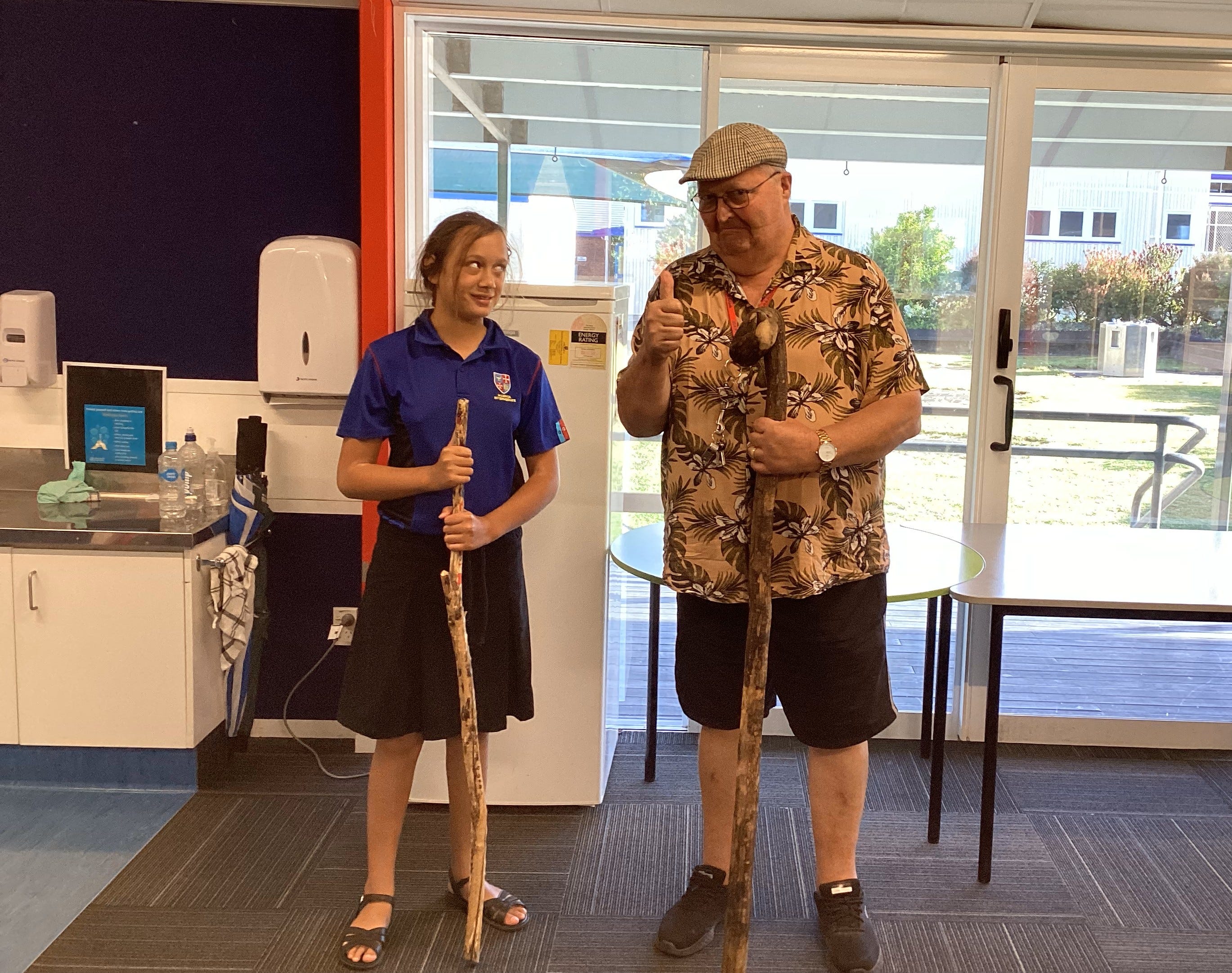
Last week, a teacher at my child’s school, Matua Derek, spent his weekend carefully selecting and crafting a walking stick. He put a great deal of thought and consideration into selecting the right sort of stick (strong and stable, not too heavy or big, not too short or too tall), and then crafted and refined it, making it safe and suitable to use.
This walking stick will mean our child can participate fully in school gully explorations and associated hands-on environment-based lessons. I am still rather emotional at this tangible gift of care.
Some context: The school has a 0.5-hectare gully. Prior to the school restoration programme starting in 2020, it was a dumping ground for rubbish and a breeding ground for pests (both weeds and animals). Unsurprisingly, it was out of bounds to students. Since the start of the restoration project, students, whānau and members from the local community have spent hundreds of hours clearing weeds and rubbish. Classes have grown over 4,000 eco-sourced plants, replanted native trees, and created a lizard habitat and outdoor classroom.
It’s growing into a fantastic space. The school students love the outdoor classroom and enjoy taking visitors on gully tours, showing first-hand the differences they have made to protect their community from unwanted pests and diseases.
However, as you can see from the images below, navigating this space can be difficult and challenging when you have a visual impairment, struggle with balance, and/or are a bit unsteady on your feet.
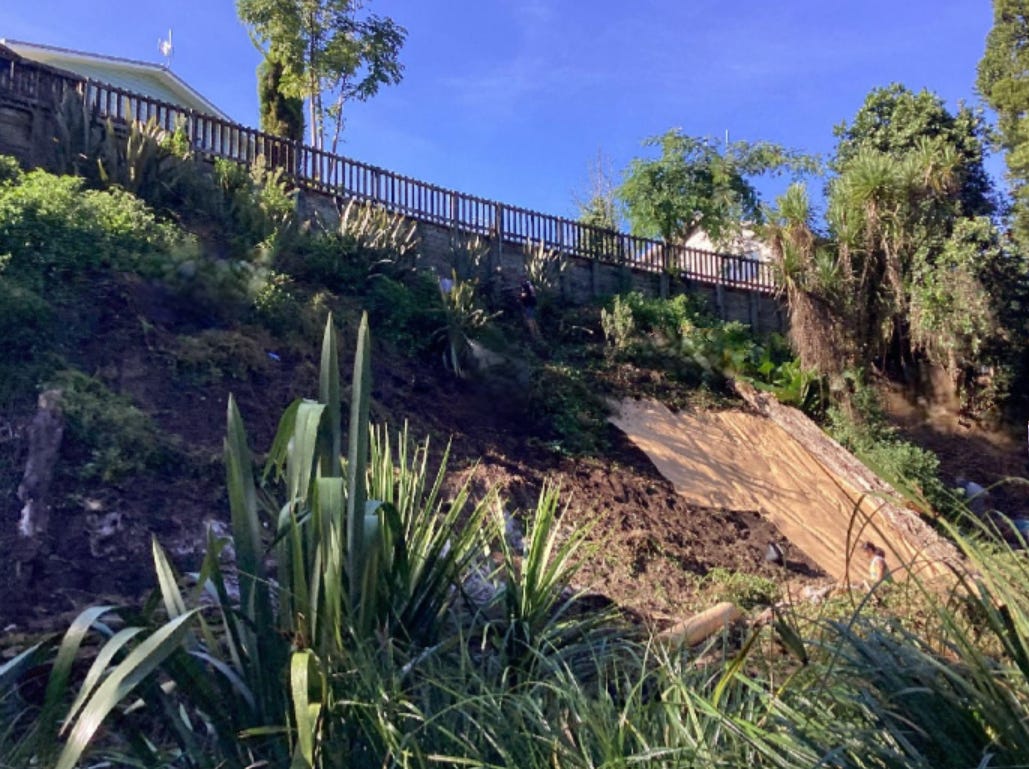
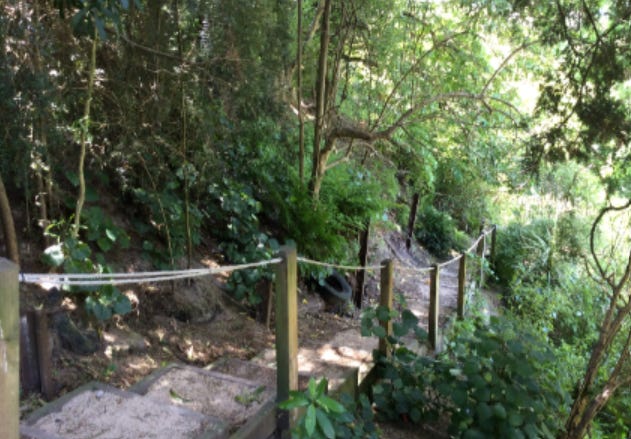
Matua Derek is the teacher responsible for overseeing gully explorations, which are part of the school curriculum. He did an amazing job over one weekend at the start of term to make sure that the gully area was organised and safe for our girl to participate in classes alongside her classmates. He carved and made a reliable walking stick for several students (including ours) so that they all had helpful balance when going down the stairs.
Her teacher was so happy seeing our daughter light up at being able to join in with her classmates during gully time.
I was quite undone when I found out. I didn’t have to advocate, or ask, or push for inclusion. Matua Derek simply noticed that our girl finds steps really hard to navigate, thought about what they could do about it and how they could be inclusive in a positive way, and then they did it.
It was a simple, tangible act of care, but it has meant the world to all of us.
May we all have the joy of a Matua Derek in our lives and the lives of our children.
Kindness like that brings a tear to my eye, ngā mihi
This.
Inclusion.
Thought-full.
Enjoy every moment of the gully Bex's girl!