
The propaganda is going wild
It's not just the covid inquiry - it's in reporting and consultations too

The results are in from the second Covid inquiry. Not unexpectedly, National, ACT and NZ First are all seizing the opportunity to perpetuate their own narrative. As Alice Neville writes for The Spinoff, we are living in a post-truth world and facts don’t seem to matter to this government:
You don’t have to get too far through the 1,000-plus-page final report of the royal commission of inquiry into New Zealand’s Covid response to realise it’s not going to be a scathing rebuke of government overreach. “Evidence shows New Zealand had among one of the best pandemic responses in the world,” reads the summary.
But as the embargo lifted and the press releases began to roll in, a very bleak realisation dawned on me. It didn’t matter what the report said. Why would it? Reports are long. Reports are boring. No one wants to relive the pandemic by reading this one. People in power can say what they want. Facts don’t matter.
It’s demoralising. It’s depressing. It’s rough on all of us who value evidence and evidence-based policy making, that evidence gets hand-waved away in favour of political point-scoring and comfortable lies.

I’ve spent a bit of time this week writing responses to the Total Mobility review and the draft seventh periodic report on the International Covenant on Civil and Political Rights. Littered across both are National talking points, PR comms, and questionable statements. It’s a noticeable shift - and deeply worrying, that government Ministers are embedding their political rhetoric in what should be evidence-based reporting and consultation rounds.
The ICCPR in particular reads as political theatre rather than evidence based reporting - the sections on pay equity, young offenders, and prisoner voting are notably problematic.
This post covers firstly Total Mobility and then ICCPR. I include links if you have time and/or energy to make a submission before the cut off dates later this month. Feel free to scroll down to the parts that interest you.
Total Mobility
There is almost palpable rage in the community at the attempt to reframe reducing the Total Mobility transport subsidy as “strengthening” the system. Disabled people aren’t foolish. They know a cut in supports when they see one, no matter the attempts to reframe it as something else - users of the Total Mobility scheme are facing a 35% increase in costs. That’s not “strengthening” the scheme, it’s reducing it.
Politically motivated framing makes it hard to engage with proposals good faith. It is exhausting, constantly providing feedback in consultation rounds, when you know the relevant ministers and ministries are merely skating on our good will, attempting to cut costs, and, in this case, seeking to place the burden of the additional costs of transport onto disabled people and families – many of whom are already experiencing disproportionate amounts of material deprivation and need.
Public transport for disabled persons is often inadequate, local councils are not adequately funded for accessible transport, and, despite being well aware of the increase of an ageing population, successive governments have failed to adequately plan for the increased transportation needs of an aging population. This failure to plan is not the fault of the disability community - yet, it is disabled people and families that are now expected to bear the costs of this failure to plan.
Disabled people are essentially being expected to pay for tax cuts for wealthier groups – despite households with disabled family members being over-represented in poverty and material deprivation statistics. That is, the most vulnerable and impoverished households in Aotearoa New Zealand are being expected to subsidise the tax cuts given to the wealthiest households.
A government that can afford to provide tax cuts, landlord tax breaks, and tax breaks for tobacco industries is a government that could afford to subsidise transport for those unable to drive. The consequence of this government’s choice to subsidise the already wealthy is insufficient income to subsidise disabled persons transportation needs. That is a deliberate choice.
What can we do?
Make a submission on the Total Mobility review
Submissions are open until 22 March 2026. You can find more information and submit here. Some starting ideas:
Proposal 2A: Evidence Requirements in the Assessment Process
Evidence requirements should not be overly burdensome. A broad range of existing medical documentation should be accepted. People should not be required to obtain additional reports or undergo further assessments where suitable documentation already exists.
Proposal 2B: Periodic Reassessments for Ongoing Eligibility
Many disabled people already undergo frequent reassessments for services such as Work and Income support, disability funding, and ongoing medical care. Additional reassessments create unnecessary stress and administrative burden. The administrative cost to the state means this is of limited value.
For people with permanent disabilities, reassessments can be re-traumatising and are unlikely to provide meaningful value. A more appropriate approach would be to distinguish between temporary disabilities, which may require review, and permanent disabilities, which do not.
Proposal 3: Caps on Trips Based on Level of Need
A very bad idea. Strongly disagree!
Transport needs can change over time. Requiring individuals to apply for additional trips when circumstances change creates delays and administrative burden. During this time, disabled people and their families may need to cover additional transport costs themselves.
The proposed categories for community participation are too narrow and do not adequately reflect the range of activities disabled people undertake. Parenting responsibilities, everyday errands, and participation in community life are completely absent from the list - this is quite concerning!
Further research into the reasons behind higher usage of the scheme would be valuable before introducing caps, as this would help ensure any policy changes address the underlying needs.
Proposal 4: Increasing Wheelchair-Accessible Vehicles
This isn’t too bad an idea. Wheelchair users frequently experience difficulties accessing suitable vehicles, particularly outside normal hours. There is growing demand for vehicles capable of transporting larger powerchairs. Policies that incentivise more accessible vehicles within the transport fleet would improve mobility and participation for wheelchair users.
Proposal 5: Enabling New Service Providers
Again, not a terrible idea. This could improve choice and service quality. Increased competition may address concerns about current provider practices and limited mechanisms for reporting issues. There is potential value in allowing rideshare providers to participate, provided that safeguards are in place to ensure disabled people’s rights are upheld, service dogs are included, and transparency is sufficient. Tools that provide greater transparency (e.g., apps or trip summaries showing fares and usage) would help ensure fair use of the scheme and prevent exploitative practices by providers.
Proposal 6: National Public Transport Concession
A national public transport concession for disabled people would provide greater consistency across regions and is broadly a great idea. However, implementation should include dedicated funding from central government. Many regional councils already face financial constraints, and the cost of a national concession should not fall solely on local ratepayers.
International Covenant on Civil and Political Rights (ICCPR)
In April, the New Zealand Government is due to submit its seventh periodic report on the International Covenant on Civil and Political Rights (ICCPR) to the United Nations Human Rights Committee, which monitors how signatories are implementing the ICCPR.
New Zealand ratified the ICCPR on 28 December 1978 and is one of more than 170 countries that have done so. States that ratify the ICCPR report periodically to the Committee on the measures they have adopted that give effect to civil and political rights and on progress made in the enjoyment of those rights.
The ICCPR is the main international treaty dealing with civil and political rights, many of which are affirmed by the New Zealand Bill of Rights Act 1990. It affirms rights including life, liberty and security, and privacy; freedom of expression, association and assembly; the right to participate in public life; and rights relating to criminal procedure, such as the right to a fair trial.
The report outlines developments and measures adopted by New Zealand during the reporting period to give effect to the rights guaranteed by the ICCPR. New Zealand’s most recent periodic report was considered in 2016.
The seventh periodic report should be fairly neutral in language and supported by evidence. This report is going to the United Nations - the ICCPR periodic report is intended to present verifiable, evidence‑based information on how the Government is implementing civil and political rights (e.g., legislative changes, programmes, data on outcomes). Statements that resemble party political positions or debate should be supported with evidence or re‑framed to reflect their status accurately, in order to preserve the report’s integrity for review by the UN Human Rights Committee.
Yet the draft report is littered with political slogans, right-wing talking points, and empty rhetoric. Including statements that cannot be backed with data or demonstrable actions weakens New Zealand’s credibility and undermines the Committee’s assessment process.
Below are 10 examples of statements in the draft ICCPR report that are political talking points, are incomplete, and/or overlook impacts on vulnerable groups. The Pay Equity one is particularly egregious. I’ve also included recommendations for an easy cut and paste for those so inclined (or a starting point to put your own thoughts in!)
1. Statement on Law and Order (¶20)
Issue: The sentence “The Government is focused on restoring law and order” is a political slogan rather than a fact-based statement.
Recommendation: Remove or rephrase to reflect measurable initiatives or outcomes, e.g., specific crime reduction programmes, legislation implemented, or data on violent crime trends, rather than government rhetoric.
2. Crimes Amendment Bill and Ministerial Advisory Group Recommendations (¶22)
Issue: The report refers to the Crimes Amendment Bill and recommendations from the Ministerial Advisory Group without critical assessment. The report should address concerns raised about human rights impacts, particularly regarding due process, proportionality, and sentencing practices.
Recommendation: Include an evidence-based critique of the bill’s potential impact on civil and political rights, and indicate whether the recommendations have been implemented in line with best practice and human rights standards.
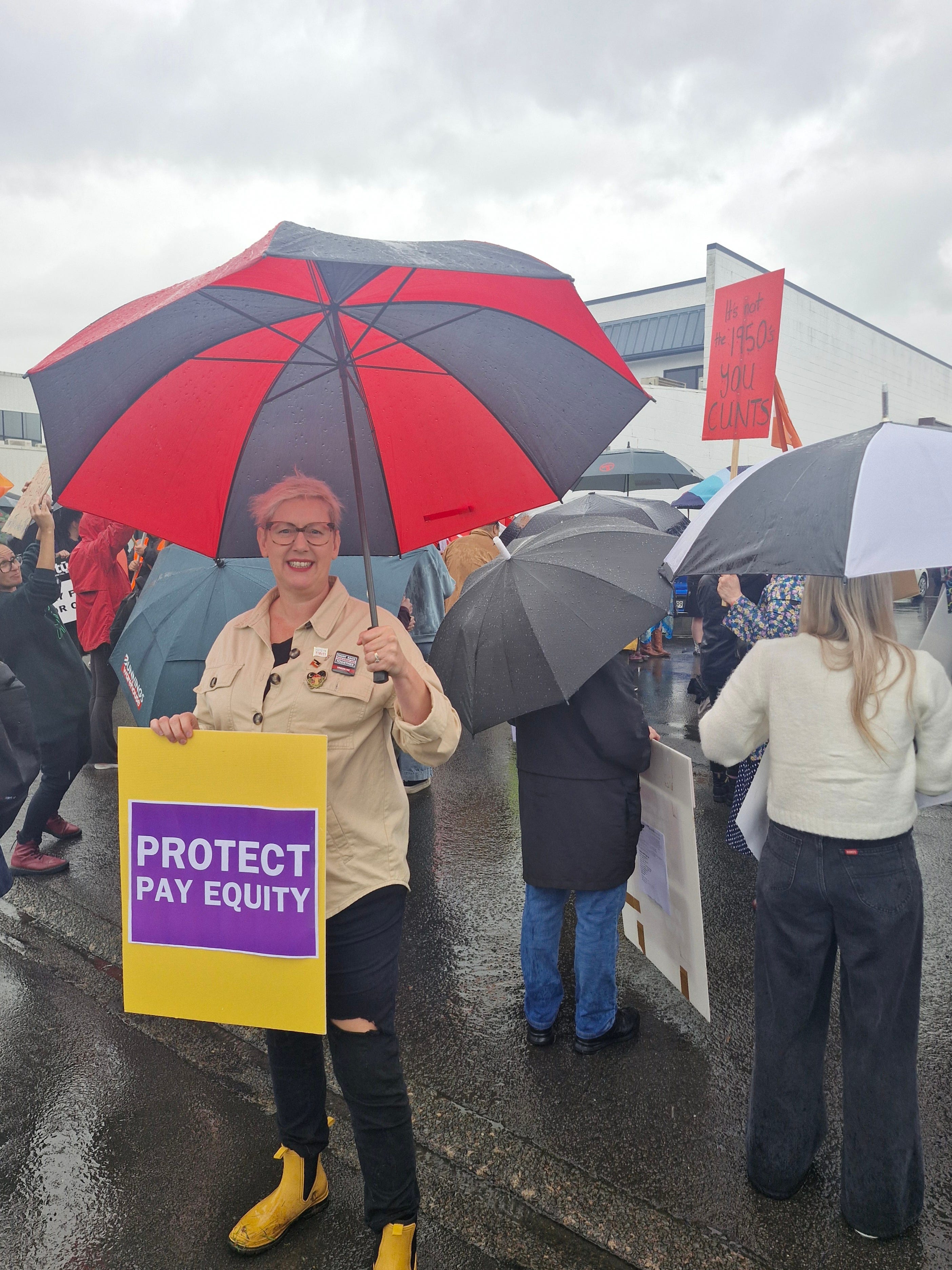
3. Pay Equity Bill (¶25–26)
Issue: The report frames the Pay Equity Bill as promoting “equal pay,” which misrepresents pay equity legislation. It overlooks:
The disproportionate impact on disabled persons and care workers.
The immediate halt to 33 pay equity claims, as well as claims likely to be lodged in the near future.
Recommendation: Correct the framing to reflect pay equity obligations and acknowledge ongoing inequities affecting disabled people and carers. Include analysis of the human rights implications of these legislative changes.
4. Legislation-Related Talking Points (¶85–¶89)
Issue: These sections largely repeat government talking points without reflecting opposition, independent evidence, or critique. ¶85 in particular is political messaging rather than factual reporting.
Recommendation: Revise to include:
Perspectives of civil society and affected groups.
Evidence on the effectiveness or impact of legislation.
Avoid presenting government positions as the sole factual account.
5. Statement in ¶91
Issue: The last sentence is a government talking point rather than a factually supported outcome.
Recommendation: Clarify whether there is evidence supporting the statement or remove it to ensure neutrality and accuracy.
6. Young Serious Offenders and Military Academies (¶240)
Issue: The report discusses young serious offenders and military academies in ways that do not align with best practice in juvenile justice and rehabilitation.
Recommendation: Include evidence-based international standards for youth justice, highlighting concerns about detention, militarization of rehabilitation, and disproportionate impacts on vulnerable youth.
7. Convicted Offenders and Human Rights Breaches (¶298)
Issue: The section on convicted offenders fails to adequately address human rights breaches, including conditions of detention, accessibility, and fair treatment.
Recommendation: Incorporate human rights standards and evidence of where practices may constitute breaches, and indicate any government measures taken to address these issues.
8. Use of Reasonable Force on Young Offenders (¶302)
Issue: The report notes the use of “reasonable force” on young offenders but does not address the potential human rights implications, including risks of disproportionate or excessive use, lack of oversight, and impacts on vulnerable youth.
Recommendation: The report should:
Assess whether current policies and practices align with international juvenile justice and human rights standards.
Include evidence or data on the frequency, circumstances, and safeguards for use of force on young people.
Highlight the rights of young offenders to protection from inhumane or degrading treatment, in line with ICCPR Articles 7 and 10.
Rationale: Ensuring that practices with young offenders meet human rights standards is critical to New Zealand’s obligations under the ICCPR.
9. Regulatory Standards Act (¶317)
Issue: The report notes the passage of the Regulatory Standards Act but does not reflect that most public submissions opposed the Act, and concerns raised by stakeholders were largely ignored by the government.
Recommendation: The report should:
Accurately reflect the scope of public opposition and submissions received.
Include discussion of any human rights or civil rights implications raised by submitters.
Clarify the government’s rationale if submissions were not incorporated, to provide transparency in ICCPR reporting.
Rationale: Full transparency on consultation processes and how dissenting views are treated is essential for demonstrating civil and political rights protections.
10. Ban on Prisoner Voting (¶330)
Issue: The report mentions the ban on prisoner voting but fails to acknowledge that this policy constitutes a breach of human rights, including ICCPR Article 25 (right to participate in public life). Many affected prisoners have disabilities, meaning the policy disproportionately impacts disabled people.
Recommendation: The report should:
Clearly identify the human rights implications of restricting prisoner voting.
Include evidence or acknowledgement of the disproportionate impact on disabled prisoners.
Reference relevant UN Human Rights Committee guidance on voting rights for prisoners.
Rationale: Recognizing these rights violations is critical to ensure that ICCPR reporting accurately reflects compliance with New Zealand’s civil and political rights obligations.
What can we do? ICCPR
The Ministry of Justice is seeking feedback on the draft report, to help ensure the report is clear and accurate, and to determine if they should include any other information relevant to civil and political rights in New Zealand.
When providing feedback consider the following issues:
Does the report cover what you see as the most important issues and developments to do with civil and political rights in New Zealand since 2015? Is there anything important missing?
Do you have feedback on specific areas of the report?
What has the government done well to improve the enjoyment of civil and political rights in New Zealand since 2015?
What are the most important areas the New Zealand Government could address to enhance civil and political rights and enable equal enjoyment of human rights?
How you can get involved
An online survey to provide feedback is available through the Ministry of Justice’s public consultation portal, which you can access here. The survey is live until 19 March 2026.
Within the online survey, you can provide general feedback on the report, or you can select individual questions and leave your feedback on the parts of the report most relevant to you.
Alternatively, you can email your feedback to: humanrights@justice.govt.nz
Dr Bex, I can hardly read your article. I will have to come back to it. I too am upset about the misinformation that National is propagating.I too value evidence and evidence based policy making. In my FB Newsfeed I have been blasted with posts from Christopher Luxon, Chris Bishop and Nicola Willis. I have reported for misinformation. I admire Chris Hipkins who responds to the false allegations with a quiet voice. The others all have voices filled with venom and glee. I will reread as you describe with accuracy what is happening.
We are indebted to you once again, Dr Bex, for raising these two important submissions.
I had just pressed send on my submission on the Ministry of Transport’s proposal to ‘Strengthen’ Total Mobility when I saw your Substack post pop up in my notifications.
I think I raised many of the same points as you.
I ignored Chris Bishop’s ‘reckon’ that people could not submit on the already decided 1 July 2026 changes to reduce the Government subsidy, which will mean increased costs for Total Mobility Scheme users.
I also noted that, for people with dementia who use the Total Mobility Scheme, while improved wheelchair access is a good thing, they often need other kinds of accessibility changes too, including dementia-friendly design and practice. They also frequently need a supporter to travel with them, which means two fares, not one.
And do not get me started on the proposal that people may periodically have to reapply for the scheme and, in effect, re-prove dementia. I was 'not best pleased' about that one. But made sure swear words didn't accidentally get into my submission - although plenty were going around in my head.
I also got my submission in on the Carers Strategy Action Plan. In my view, most of what is proposed will not positively change what carers actually experience. Although, there were a couple of good ideas. I noted the lack of any meaningful changes for unpaid whānau carers, nor anything that may incur increased government expenditure. A lot of it read like a MSD/DSS work plan and mapping and picture painting, not at all focused on making improvements for carers. And, it will be up to Louise Upston if she does anything with the Action Plan!
Unfortunately, this Government seems to think that people with disabilities, their whānau, and supporters will just have to lump it or leave it when changes are proposed or, worse, simply imposed without proper consultation. Even when consultation does occur, it often feels performative, with little real consideration of the consequences.
People are being treated like cost units, where lowering support costs frees up money for corporate welfare and further transfers of wealth to those who are already well off and well sorted.
In all my life, I have never seen a New Zealand Government so cruel, so willing to ignore evidence, and so determined to press ahead with changes that will harm so many people.
Yet they wrap it all in language designed to sound positive, such as ‘strengthening’.
I am really over doing submissions and having to stay ‘professional’ in my communications, but I will keep at it.
It looks like this weekend will also involve reading the ICCPR draft report and preparing a submission on that too.
Sigh.